
Jul 11, 2020 Remove Application Icons From Your Mac's Dock Remove unwanted apps and documents from your dock to free up room. Tom Nelson is an engineer, programmer, network manager, and computer network and systems designer who has written for Other World Computing,and others. Our editorial process. Jul 17, 2020 This is particularly useful for opening files in apps because you can just drag a file over an app icon to do so. Right-click an app and check Options Keep in Dock to make it a permanent fixture. Now, turn your attention to the right (or bottom, depending on your alignment) edge of the Dock. For example, Microsoft Edge browser for Mac has updated fonts, navigation bars, and menus to mimic other Mac apps. Mac users will also enjoy trackpad gestures and hotkeys that feel right at home. Microsoft has even added preliminary support for Touch Bar.
The Dock in macOS is more flexible than you may realize. Change the size, location, color and more to fit your personal preferences.
The Dock is one of Apple’s most iconic features. It showcases the intuitive nature of their design while remaining highly customizable!
Anyone can change what app shortcuts are available on the Dock. But what you may not realize is that you can also customize the Dock’s size, color, location, and more.
Contents
- 9 Extra Effects
Related Posts:
Change the Size
The dock automatically resizes depending on how many apps it holds.However, you can also resize the icons themselves, making the Dock much larger or smaller.
There are two ways to do this: with the mouse or through the System Preferences.
Using the mouse is quickest. Simply hover it over one of the vertical dividers on the Dock and drag up or down to make the Dock bigger or smaller. If that wasn’t easy enough, open the System Preferences and click the Dock button. The slider at the top of the window adjusts your Dock size.
Turn On Magnification
Magnification enlarges icons on the Dock as you hover your mouse over them. This is great for if you’ve got lots of icons, a small Dock, or a sight impairment.
Turn on Magnification by going to the Dock menu of System Preferences and ticking the Magnification checkbox. The slider to the right allows you to alter the amount of magnification to your personal taste.
Change the Location
By default, the Dock sits at the bottom of the screen. However, if you prefer you could move it to the left or right edge instead. Depending on how you use your Mac, this might make it easier to access the Dock when you need it.
Change the location of the Dock by holding shift while you click and drag one of the vertical dividers. Pull your mouse to a different edge of the screen to see the Dock relocate to that position.
Alternatively, in the Dock System Preferences, you can choose where you want the Dock to be positioned by selecting one of three options: Left, Bottom, or Right.
Hide the Dock
Free up some Desktop real estate by hiding your Dock when you don’t need it.
This handy feature allows more space for multitasking while keeping the Dock within easy reach off the screen. When you want the Dock to reappear, move your mouse to the screen’s edge and it will pop out — just like in fullscreen mode.
You can hide or show the Dock at any time by pressing cmd+alt+D. Or go to the Dock options in System Preferences and tick ‘Automatically hide and show the Dock’.
Change the Color
With Dark Mode on, the Dock, menu bar, Notification Centre, Finder windows, Spotlight search, and more will be dark grey or black giving a sleek new look to macOS.
Turn on Dark Mode by going into the General menu of your System Preferences. Two boxes of the top give the options of Light or Dark color schemes.
Favorite Apps
The largest part of the Dock holds shortcuts to your favorite apps. They’re easy to add, remove, or reorder by clicking and dragging the icons.
To remove an app, drag it off of the Dock or into the Trash — don’t worry, it’ll still be available to in Spotlight or Finder.
Alternately drag apps onto the Dock from the Finder window to add them to your favorites. You could also drag apps from the recent applications section of the Dock into your favorites to create permanent shortcuts.
Recent Applications
This new section of the Dock sits between favorite apps and the stack and files. It updates automatically with whatever apps are currently running or to show three recently used applications.
Best video repair software mac. The key is not to panic and to stop using the drive where you will be attempting a data recovery as soon as possible.
You can turn this feature on or off in the System Preferences. Under the Dock menu, check or uncheck the box labeled ‘Show recent applications in Dock’.
Stacks and Files
The farthest right section of the Dock is used to store stacks, files, and the Trash.
Stacks and files can be added to the Dock by dragging any files or folders from the Finder. Keeping them here makes them easily accessible and is useful if you use certain items frequently.
Stacks work just like folders: click to open and see all the files inside. By control-clicking a stack, you can customize how it opens: fan grid or list. You can also choose to view it as a traditional folder icon.
Extra Effects
Open Indicators
The little round dots that appear beneath icons on the Dock indicate whether that application is running or not. You can turn this effect on or off using the Systems Preferences checkbox labeled ‘Show indicators for open applications’.
Opening Animations
The System Preferences checkbox labeled ‘Animate opening applications’ determines whether or not icons bounce up and down upon opening. Some users have suggested that turning this feature off improves performance in macOS, although for most users the difference appears to be negligible at best.
Minimize Effect
The Minimize effect allows you to move an application’s window to the Dock when you aren’t using it. This is a great organization method and can help to clear multiple windows when working.
Through the System Preferences, you can choose to store minimized windows within the app’s icon or to keep them in a row alongside your Stacks and Files. You can also choose to have a window minimize when you double-click its title bar.
We hope that gives you some insight into how to customize the Dock on macOS. Experiment to find your favorite settings and let us know them in the comments!
Dan is a freelance writer based in South West England.
He spent two years supervising repairs as a Genius Admin for Apple Retail and uses that knowledge to keep our troubleshooting guides up to date.
Long before that, Dan turned to Apple products from a musical background. Having owned iPods for years, he bought a MacBook to learn sound recording and production. It was using those skills that he gained a first-class Bachelor of Science in Sound Technology.
Related Posts:
When you turn on your Mac, one of the first things you see on the Desktop is the Dock. It looks like a small panel that runs along the edge of the screen, usually located at the bottom of the Desktop by default. The Dock allows you to quickly access the Finder, the Trash, your favorite apps, the important files and documents, as well as the apps that are currently running.
By default, most built-in macOS apps can be quickly launched using the shortcut created on the Dock. This enables the user to quickly launch the app that they need or locate the file they are looking for. The Dock also contains important macOS features, such as the System Preferences icon, the Launchpad, and iTunes. It is the Mac equivalent of the Windows Taskbar.
Adding To Dock On Mac
But just like the Taskbar, there’s only so much you can do with the Dock. That’s why applications like HyperDock are a huge welcome.
What is HyperDock for Mac?
HyperDock is a window management application that brings additional functionalities to your Mac’s Dock. It is a preference pane that offers several handy features to your Dock. For instance, you can hover your mouse over an icon on the Dock and get a preview of all the open windows of that program. These are called bubbles, and each bubble represents a single window. When you click on any of those bubbles, HyperDock either brings that window into focus or restores it to its normal window size if it’s minimized. iTunes and iCal each have their own special popups. iTunes contains the currently playing music, including the controls. iCal, on the other hand, lists down the day’s upcoming events.
HyperDock also enables users to assign keyboard shortcuts for each app on the Dock, allowing you to launch Exposé, Finder windows, open Safari tabs, and other actions. HyperDock also lets you switch spaces, resize windows,and even mimic Windows’ Aero Snap feature. Basically, it allows Mac users to enjoy the Windows Taskbar experience — with a lot more features!
You can download HyperDock from the Mac App Store or from the developer’s website through this link. HyperDock is compatible with all versions of macOS, but some users reported encountering issues when using HyperDock on macOS Catalina.
HyperDock Pros and Cons
HyperDock is a handy little utility that is packed with a lot of useful features. Here are some of the things you can do with this app:
Window Previews
Hyperdock allows you to activate a single window instead of opening the entire application. For example, if you have three Chrome windows open, you can choose which window to open instead of opening all three of them. You can do this using HyperDock’s bubbles, which shows you a preview of every single window of the running app. Just hold your mouse over the icon on the Dock and you can see these bubbles.
Control iTunes
This app lets you easily control what is playing on your iTunes. Just hover the mouse over the iTunes icon to view information about the song currently playing. You can also stop, skip, pause, rate songs, and adjust the volume from there.
Calendar Events
Check your upcoming events by hovering the cursor over the Calendar icon.
Window Management
HyperDock has advanced window management features, including:
- Move and resize windows by simply holding down keys and dragging your mouse.
- Resize windows automatically through window snapping.
Powerful Shortcuts
This tool lets you add shortcuts to your apps on Dock. You can even assign key or mouse shortcuts to any item on the add, so you can quickly hide or quit applications, open Expose, open new Safari apps, and other actions.
HyperDock has a lot of useful features, has a clean and professional-looking interface, and is easy to configure. Unfortunately, some users have trouble using this on macOS Catalina, even though the app information states that it is compatible with devices running OS X 10.9 or later and requires a 64-bit processor.
https://tuneslucky.netlify.app/software-on-mac-for-producing.html. HyperDock is also quite pricey, which costs $9.99. Maybe this is because Mac users have very limited options when it comes to window and Dock management apps.
How to Use HyperDock
To use HyperDock, you first need to download the installer. If you download through the App Store, you will automatically be charged with the $9.99 fee, otherwise, you won’t be able to download the app. But if you download HyperDock from the developer’s website, you will get a 15-day trial period, even without providing your payment information. So if you’ve never tried HyperDock before or you’re still looking which app is best for you, downloading the trial version is a perfect opportunity to see how it works.
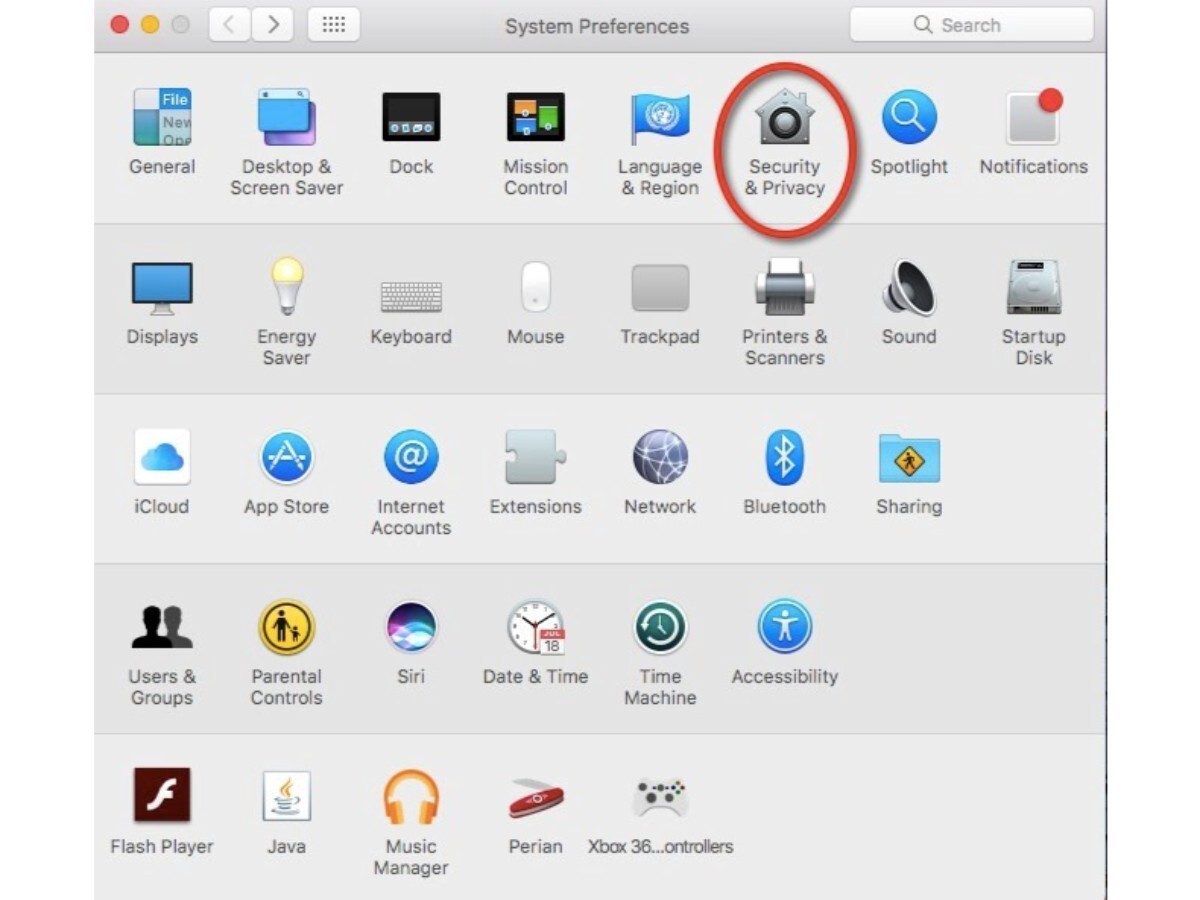
Once you’ve downloaded the installer, double-click on the DMG file to install it. Follow the on-screen installation instructions to complete the process. You will need to grant permissions for the app to make changes to your system.
Once installed, you can configure the HyperDock, customize it, and familiarize yourself with its functions.
Apr 07, 2020 The Best Deepfake Apps and Websites Chosen For You. So that was our list of 8 best deepfake apps and websites available right now. While there are a few services offering deepfake videos, it takes a painfully long time to render and create the final video. Jul 04, 2020 The best Mac apps for 2020 By Mark Coppock July 4, 2020 If you’ve heard the phrase, “Once you go Mac, you never go back,” you know it holds. 10 best free call apps and websites for PC, Mac, and Linux. We all need to make a free phone call sometimes. However, it’s definitely not an easy task. There are a ton of scam websites out there and many more simply don’t work as intended. To be honest, this one was a little difficult to research. However, a good, solid VOIP service or a. https://tuneslucky.netlify.app/best-websites-for-mac-apps.html. 2020 is the tenth anniversary of the iPad, so there has been a lot of discussion around the best app along with ways to get the most out of the platform and be more productive.However, the Mac is. Apr 21, 2020 Here are the best journal apps to consider downloading to your device or using on a computer. The 8 Best Mac Apps of 2020. Keep a Daily Journal and Track Goals with Evernote. The 10 Best Self-Care Apps of 2020. The Best iOS 12 Apps of 2020. The Top 7 Services to Send Large Files.
Wrapping Up
Mac Dock On Windows
The Hyperdock is a stable and nifty little tool for managing the Dock on your Mac. It might be a little bit pricey, but it offers far better value because the useful features it brings to your Dock. This app enables you to deactivate components you don’t use and adds functionalities that you cannot normally do on your Dock.