Jun 08, 2020 • Filed to: Solve Mac Problems • Proven solutions
NTFS (New Technology File System) is the file system used for depositing and recovering files on a hard disk. If you want to write a Boot Camp partition on your Mac system, you should use exFAT since the Mac’s operating system is already wired to read that.
Part 1: Free Ways to Write to NTFS Drives on a Mac
Among the many NTFS for Mac programs, we have chosen the best apps and will give you more details about these. If you have been looking for a good program that will give you total access to NTFS drive. Best Mac NTFS Software 1. Paragon NTFS. This is the fastest Mac NTFS program. With this in your macOS, you will be able to read and write on NTFS drives with speeds of up to six times more than the.
- Microsoft NTFS for Mac by Tuxera is easy-to-use software that makes this all possible. Use external USB drives previously formatted in Windows Swap drives regularly between Windows PCs and Macs Seamless data exchange when dual booting Windows and macOS/OS X.
- Jun 11, 2013 How to manually enable NTFS read and write in OS X. Do you have an external hard drive formatted to NTFS that you would like to use with your Mac? You can do so without using any third-party software.
Mac can read but not write to NTFS drives on a Mac, however, there are solutions.
1. Third party drivers (FREE):
Although this method requires some involving activities, you can get it to work.
- Download and install osxfuse.
- If you don’t have Homebrew yet you will download and install it next.
- Install command line tools. Go to applications and navigate to utilities from there. Run the command 'xcode-select –install'. You will see a pop up with the option to install. Choose install.
- After this you will move on to disable system integrity protection.
- Once system integrity protection is disabled you should reboot your Mac. As the system begins to reboot, press and hold command+R. The system will enter into a recovery mode.
- While in recovery mode, open a terminal from utilities and enter the command 'csrutil disable'.
- After that command you will now reboot your system in the usual way to take it out of recovery mode.
- Once fully operational, open a terminal and run these commands 'sudo mv / sbin/mount_ntfs / sbin/mount_ntfs.original' and 'sudo 1n –s /usr/local/sbin/mount_ntfs /sbin/mount_ntfs'.
- Enable system integrity protection. After this, repeat the same process to press and hold command+R while rebooting the system to enter into recovery mode.
- Enter the code 'csrutil enable'.
- Reboot your Mac to normal mode and you should be able to write to NTFS drives on a Mac now.
Open a terminal window and enter the command 'brew install homebrew/fuse/ntfs -3g'.
If you ever wish to reverse the entire process, you would need to disable system integrity protection ad run these commands right after 'sudo rm /sbin/mount_ntfs' and 'sudo mv /sbin/mount_ntfs.original /sbin/mount_ntfs' and 'brew uninstall ntsf-3g'.
You can uninstall osxfuse from the system and remove it completely from system panel. Enable system integrity protection after the uninstall.
The operating system of Mac has experimental support for writing NTFS but this is automatically off and has to be turned on by some steps. This method is the least tried and the least stable. It is in no way guaranteed and if it does not work it is not the fault of the instructions. It just does not work sometimes. Also if does not work, it could generate issue for you in the future with writing NTFS.
- To make the process easier you should change the drives word label to single word label if it has not been done already
- Open a terminal by going to applications then utilities and open a terminal. Enter the command 'sudo nano /etc/fstab'
- Add the command 'LABEL=NAME none ntfs rw,auto,nobrowse' to nano and name the file what you want by replacing NAME. If you want to write more than one ntfs file you can do so by adding a different command for them as the one above.
- Press and hold control+O to save the file or files and control+X to close nano.
(If you want to write to multiple NTFS drives that you have, just add a new line for each drives.)
If the drive is connected to your Mac, then disconnect it and connect it again. Go to finder, click on go then select go to folder and type '/Volumes'.
If this was Windows, you would find your missing USB drive in Windows by now. But Windows writes on NTFS automatically without these steps so it will be easy to find your missing USB in Windows.
Part 2: How to Recover Data from NTFS Drive
If your data in NTFS file is lost during any of the above mentioned processes, you can recover it using a hard drive data recovery software. We recommend Recoverit Data Recovery. This data recovery tool will recover data from NTFS drives. If you connect your USB device and you cannot see it you can follow our steps to find your missing USB drive in Windows and follow the simple steps to recover data from NTFS drives.
Download and launch Recoverit on you Mac and follow the next simple steps to perform Mac hard drive data recovery.
Step 1 To recover lost data from your NTFS hard drive on Mac, select you Mac hard drive where your data gets lost and click 'Start' to have a scan on your NTFS drive.
Step 2 The scan will require a little time to finish searching lost files. The scanning procedure will be displayed in real time.
Step 3 After scanning, you can preview the recoverable files, select the desired ones and click on 'Recover' to get them back.
A Mac can read NTFS files but cannot write on them. This can be changed by using some free third party apps that can easily be downloaded, installed and used on a Mac to write NTFS. Apple also has an experimental NTFS write support. You can make use of this for writing NTFS on Mac.

What's Wrong with Mac
- Recover Your Mac
- Fix Your Mac
- Delete Your Mac
- Learn Mac Hacks
When you are reading your NTFS drive on Mac OS X, you may want toshare files between Mac and Windows PC. However, attempting to drag a file into an NTFS drive on Mac OS X will only result in your mouse cursor turning into an error sign. That can cause a lot of problems to file management.
Fortunately, there are many NTFS for Mac utilities in the market and most of them are paid. But in the article, we have found out free NTFS for macOS or Mac OS X software, helping you read and write to NTFS drives on macOS and Mac OS X.
Free NTFS for macOS and Mac OS X (not recommended!)
Here are four free NTFS for Mac software:Mounty for Mac,NTFS-3G, FUSE for macOS, SL-NTFS. Such free NTFS for Mac OS X software may help you write NTFS drive in Mac OS X or macOS. But free NTFS for Mac OS X or macOS software takes a bit of extra work.
Take NTFS-3G as an example. To make this free NTFS for macOS or Mac OS X software work, you have to install oxfuse, Homebrew, and install xcode. Further, you need to disable System Integrity Protection, re-enable System Integrity Protection, restart the Mac. It's not as easy as you can imagine, and may cause some problems to your macOS or Mac OS X. So we suggest you to use commercial NTFS for Mac OS X and macOS.
Commercial NTFS for /macOS and Mac OS X
In this post, we will recommend you two reliable NTFS for Mac tools. Both of them won't cost you too much and have great performance.
1. NTFS Assistant - the cheapest NTFS for Mac in App Store
NTFS Assistant is a tiny and professional NTFS driver for macOS that enable us to read and write to NTFS drive on macOS Mojave 10.14/High Sierra 10.13/10.12/10.11/10.10/10.9/10.8/10.7. NTFS Assistant has a very low price and can mount NTFS drive, transfer files with fast speed.
Guidance to download and use NTFS Assistant
Step 1: Download and install NTFS Assistant fromApp Store >>.
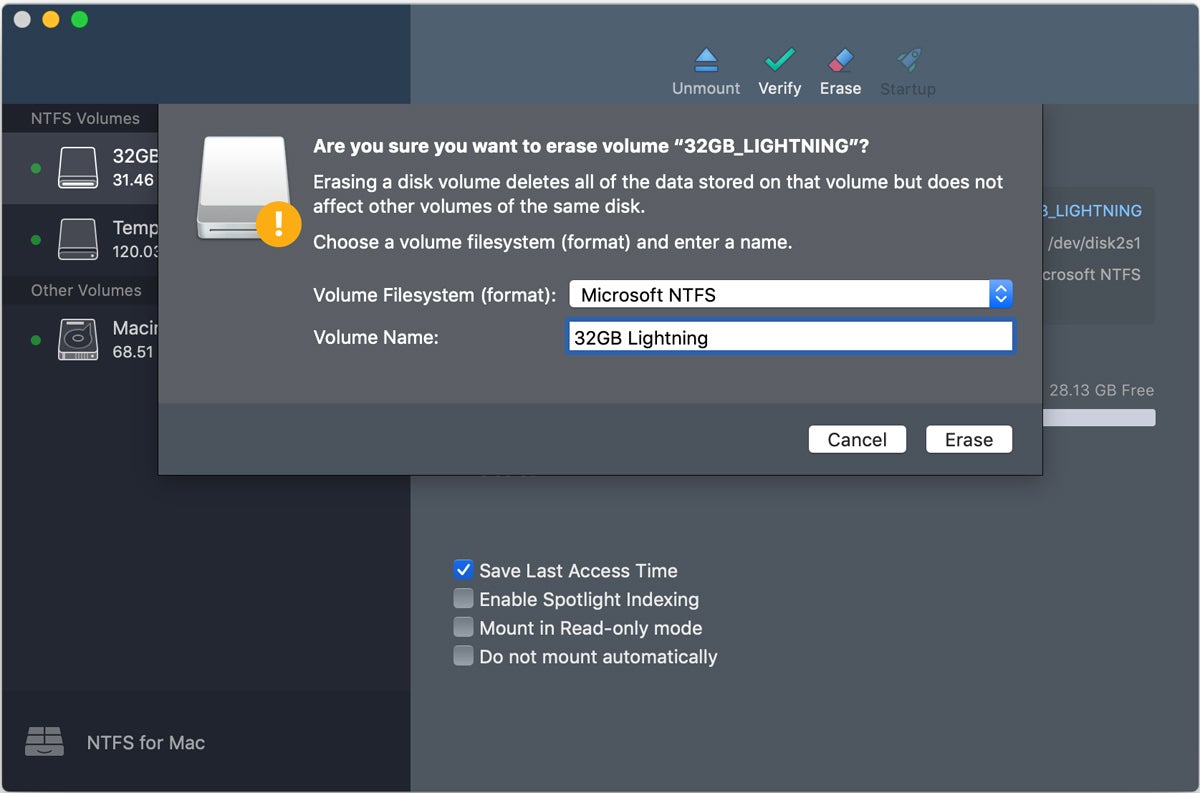
Step 2: Download and install NTFS Assistant Helper >>.
Step 3: Launch NTFS Assistant and connect a NTFS drive to Mac.
2. iBoysoft Drive Manager - mount NTFS drives, external drives and network drives
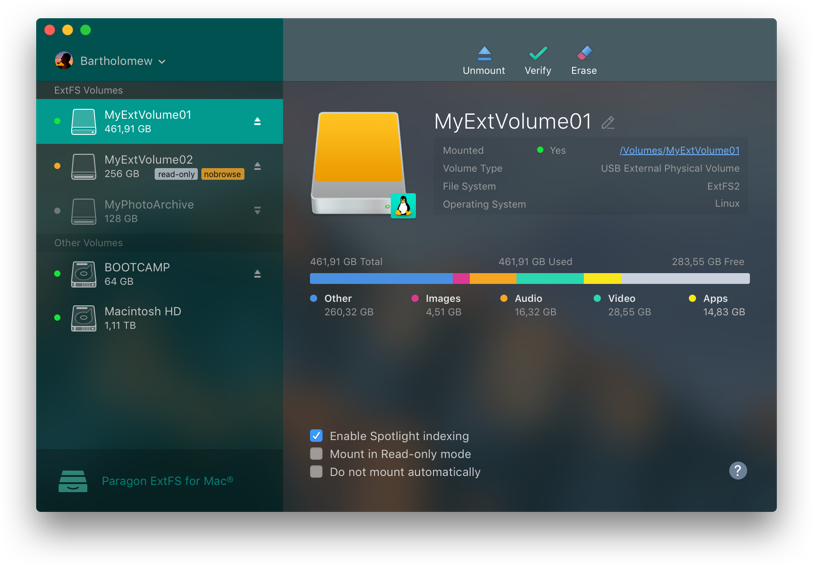
iBoysoft Drive Manager is a professional tool for Mac thatmounts your NTFS drive in Mac OS X and macOS as a regular drive with read-write mode, and enables you toread and write NTFS drive in Mac OS X and macOS.
Ntfs For Mac Download
Can A Mac Read Ntfs
It is fully compatible with macOS 10.15 (Catalina),10.14 (Mojave), 10.13 (High Sierra), 10.12 (Sierra) and Mac OS X 10.11 (El Capitan), 10.10 (Yosemite), 10.9 (Mavericks), 10.8 (Mountain Lion).
It's wrapped in an intuitive interface and has simple options, making it accessible to all types of users, even those without prior experience in NTFS for macOS or Mac OS X software. After installing and launching iBoysoft Drive Manager and connecting your NTFS drive to Mac, it will automatically and safely mount your NTFS drive in macOS or Mac OS X as a regular drive with read-write mode. And you can manage your NTFS drive fast and intuitively from the menu bar.
Besides, iBoysoft Drive Manager allows you to read/write exFAT, FAT, FAT32 drives. And it helps you to mount/unmount external drives and make network drives connected, available in your Mac. It will automatically and safely eject all external drives when the system sleeps and mount all network drives when system wakes from sleep. With only one click, you can mount, unmount, or eject all drives. And considerate notifications are given when network drive is connected, available, disconnected or an external drive is mounted, unmounted, remounted or unplugged safely.
Mac Ntfs Read Only
Still have questions?