The Mac’s performance speed depends on Mac memory volume. If any app you open on your system runs out of the memory, it may slow your Mac down. In this article, we will explain how to check Mac RAM usage and how to free up RAM to fix a slow Mac. How to check the memory on Mac. How to check memory usage by apps on Mac.
Before installing more RAM, or resorting to downloading an app, there are a number of things you can do that might free up your RAM and fix your Mac’s memory problems. Restart your Mac. While the first Mac came with a relatively minuscule 128K (kilobytes) of RAM, the newest crop of Macs comes with a minimum of 4GB of memory — with many including 8GB or 16GB right out of the box. But those first Macs also had an advantage in that apps were written to take advantage of that minimal memory as much as possible. In the Activity Monitor app on your Mac, click Memory (or use the Touch Bar) to see the following in the bottom of the window. Memory Pressure: Graphically represents how efficiently your memory is serving your processing needs. Memory pressure is determined by the amount of free memory, swap rate, wired memory, and file cached memory. Dec 06, 2019 Tap System.Check the metrics you want and exit the app once you’re done. How to Check CPU Usage on iPhone. Your iPhone may limit the clocking cycle to save battery power, but in the event that the device is running out of full capacity, you need to check its CPU frequency.To check the CPU on iPhone, you can use the Lirum Device Info Lite app here too. Read reviews, compare customer ratings, see screenshots, and learn more about Smart Memory Lite - Check RAM & System Checker. Download Smart Memory Lite - Check RAM & System Checker and enjoy it on your iPhone, iPad, and iPod touch. On the window that opens, go to the ‘Overview’ tab. Here various details of your Mac are shown, including Memory usage. For more information, click on the ‘System report’ button. Under hardware, find the Memory tab. On the right pane, you will see the slot details. You can also make use of the Activity monitor that shows real-time.
In 2020, our digital life mostly revolves around browsing. Firefox, Chrome, or Safari are collecting insane amounts of data. Our tabs are bursting with media-rich content and all these activities desperately compete for our RAM.
No amount of RAM memory is enough by today’s standards. Even the new MacBook Air released in 2020, as has been demonstrated, is performing slower than the old iPad from 2018. This raises a few questions: how much RAM can my computer take and how to manage your processor’s memory better.
But first, let’s define what is RAM.
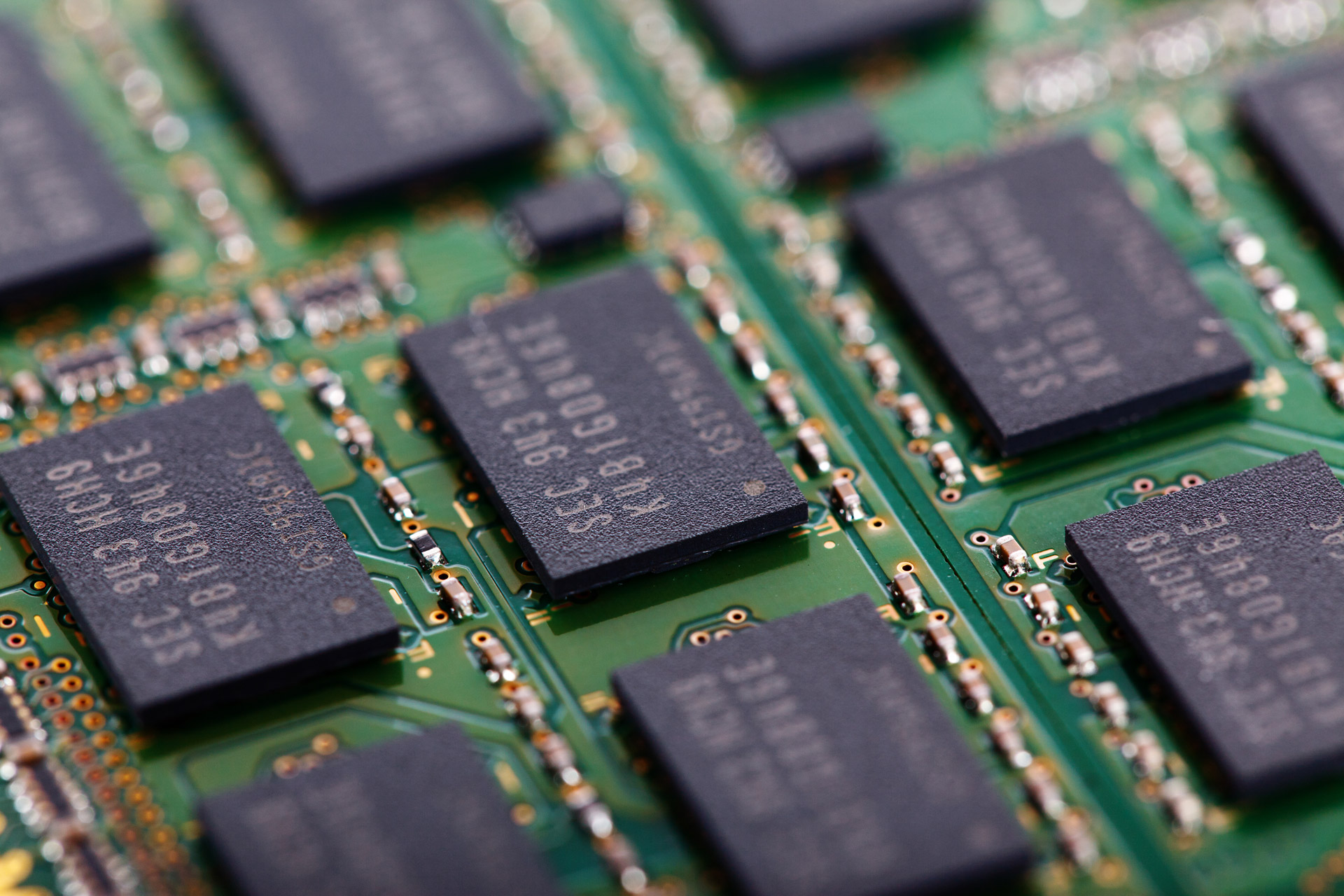
RAM stands for “random access memory.” What is RAM used for? For temporarily operations, like copying files or opening tabs. It’s just a temporary storage of memory that is being emptied after the task is complete. It's fully flushed when you restart your Mac.
What is Heavy Memory Usage?
Heavy memory usage means your Mac is running out of free RAM. This is the memory your Mac’s CPU can access quickly, without having to use hard drive memory. The CPU relies on RAM to run all of your processes fast, so when the system surpasses RAM capacity, things get really slow. If you use CleanMyMac X, it sends you a Heavy memory usage alert when that happens, so you could identify and fix the problem.
Why is my Mac running out of RAM?
So why is your Mac running out of RAM? Some apps and processes consume massive amounts of RAM (browsers, for example). That’s fine if you have plenty of memory, but if you don’t, your Mac will exceed its RAM capacity and start running slow. If quitting the resource-heavy app is not an option, you’ll want to tighten the belt and close other RAM-eaters.
How to check how much RAM you have
Go to the Apple menu in the top left corner of your Mac.
Click About this Mac > System report.
Now, choose Memory in the sidebar.
The info about the “slots” is your available RAM.
4 GB or less should be enough to edit documents or browse the web.
8 GB of RAM should be enough for multitasking in 2020.
16 GB will allow you to edit videos in full HD
What consumes the most RAM
Browsers and their extensions
Browsers tend to consume a lot of memory, especially if you keep a lot of tabs open all the time. Browser extensions hog some more memory, so if you have many, they might take up too much of your RAM.
Digital researcher Geoffrey A. Fowler has conducted a test to find out just how much data does Chrome actually harvest from your account. His results were staggering. It turns out, Chrome has generated more than 11.000 tracking cookies over the course of a single week. Even in anonymous mode, Chrome is in constant back-and-forth with Google servers cross-mapping your data to many databases.
Unclosed apps
When you have numerous apps open, all of them use up RAM. Some apps don’t close when you just click the red X button: the window is minimized, and the app continues running and consuming precious memory.
Connection Insecure Failed to verify the server certificate. This could be because of your network configuration or your proxy settings. You may also see experience this problem when you want to send or receive mails, because Mail app on your Mac may not connect to your email account. Using a Gmail account that is synced using iCloud syncing. On just one Mac I keep getting asked to add the password, and when I say yes, the Internet accounts pat of System Preferences comes and and then shows me a message 'Connection Insecure. Failed to verify the server certificate. Gmail mac app connection insecure app. If an app uses less secure sign-in technology, you might not be able to use it with your Google Account. You can sign in to your Google Account from any third-party app that has the 'Sign in with Google' option. You can also sign in to your Google Account using all Google products, like Gmail.
Apps that launch on startup
By default, some of your apps are set to start up with your Mac. Not only will they slow down the startup process, but they’ll also run in the background without you noticing and use up RAM.
Can CleanMyMac X fix high memory usage issue?
To fix heavy RAM usage, you’ll need to handle apps and items that consume too much memory. CleanMyMac X (download it for free here) makes it easier by letting you access all plugins and app helpers in one place. It’s a simple RAM cleaner you can use anytime. Plus, it enables you to check memory usage at a glance. If it looks like your Mac is running out of free RAM, try doing the following.
- Check how much RAM’s in use in CleanMyMac X Menu. You'll see how RAM is distributed between different categories of data.
If you’re looking for a quick improvement in performance, try clicking the Free Up button to release some of the RAM. However, this is not guaranteed to help when your Mac’s RAM usage is critically heavy.
- Click Optimization tab to see Hung Apps and Heavy Consumers to see which apps and processes gobble up too much memory.
- Disable browser extensions and login items that consume a lot of RAM with the Extensions module. That will help you cut down memory usage.
All CleanMyMac’s features are available without limitations in the full version, so if you’re still using the trial, consider getting a license here.
How to get more RAM on my Mac?
- First, you may install additional RAM slots. This is not available for MacBook Airs, unfortunately.
For example, Crucial company sells 16 GB RAM kits for MacBook Pro at $93.99. There are many guides online about installing RAM in do-it-yourself way.
- The second option is to release your occupied RAM. It can be flushed as explained above.
- What else you can do to get more RAM on your Mac is to free up your hard drive.
When the available RAM is fully booked, your Mac has a backup option. It will start using your hard disk space as a replacement. This process is called “memory swapping.” So, if you are really low on RAM, you may free up your disk to give your Mac a larger reservoir it can borrow from. How to free up your hard drive quickly is explained here.
These might also interest you:
If you’ve had your iPhone for some time and you notice its performance is slower than usual, you constantly lack space for new items, or the battery doesn’t last more than a couple of hours, you need to monitor the usage of three major components.
Checking the RAM, CPU and battery usage of your iPhone helps you determine whether your battery is wearing down or the phone needs a replacement altogether. Update ios apps on mac windows 10.
It also helps you to know how to maintain your device for better performance so it can deliver on the kind of tasks you use it for, while saving money that you’d otherwise have to spend on costly replacements and repairs.
It’s not the same as monitoring the CPU or GPU in your laptop, but there are several easy methods you can use to check the CPU on your iPhone as well as the battery life and memory usage.
There’s no built-in way of monitoring your iPhone’s CPU or RAM, but there are several free and paid CPU apps you can get from the App Store. For this guide, we’re going to show you how to do it using the Lirum Device Info Lite app.
For the battery life and health, you can use the native settings to check these, or a third-party app if you prefer.
How To Monitor RAM Usage On An iPhone
You may not hear about specs like iPhone RAM during an Apple keynote, or even find such information on the company’s website. However, you can find it from different sources because some governments’ regulatory agencies require Apple to file these details with them. For example, China’s TENAA (Ministry of Industry and Information Technology) has this information.
For the latest iPhones such as the 8 Plus, XS Max, XS, X and XR, the RAM size is either 3GB or 4GB depending on the model, with battery capacity ranging between 2,675mAh and 3,174mAh.
As mentioned earlier, there’s no direct, native setting on your iPhone to monitor and/or see the actual RAM size of your iPhone, but you can use the Lirum Device Info Lite app to check the actual and used memory.
The Lirum Device Info Lite app is available for free and can help you retrieve your iPhone’s specifications while monitoring its performance.
To check RAM on iPhone, download and install the app on your iPhone. Launch the app and go to the home screen. Tap Options (three horizontal lines) at the upper left side of the screen.
Next, tap This Device.
Tap System. Check the metrics you want and exit the app once you’re done.
How to Check CPU Usage on iPhone
Your iPhone may limit the clocking cycle to save battery power, but in the event that the device is running out of full capacity, you need to check its CPU frequency. To check the CPU on iPhone, you can use the Lirum Device Info Lite app here too.
It has a real-time multicore optimized CPU usage monitor that lets you watch real time CPU usage graphs and see metrics like:
- Number of GPU cores
- GPU model
- CPU Core Base
- CPU Current Clock and Maximum Clock
- Contrast Ratio
You can also see your iPhone’s internal activity and system data with a real-time memory allocation graph, memory clock, amount of memory and much more.
To check CPU usage on your iPhone, launch the app and go to the home screen. Tap Options (three horizontal lines) at the upper left side of the screen.
Next, tap This Device.
Tap CPU.
Check the metrics you want and exit the app once you’re done.
You can also go back to the home screen and tap Tools.
Tap CPU Monitor.
Check the graphical representation of your iPhone’s CPU performance.
How to Monitor Battery Usage on iPhone
You can also check the battery life and health or performance of your iPhone. But unlike checking RAM and CPU usage that requires an app, you can use the native settings on your iPhone or use a third-party app if you prefer it.
To check battery on iPhone, open Settings and tap Battery.
Tap Battery Health to check the health and the performance management feature that prevents unexpected shutdowns by dynamically managing your iPhone’s performance. It can also automatically turn your device off.
This feature is enabled if your iPhone battery can’t deliver maximum power instantaneously, and comes on only after the first unexpected shutdown happens. It applies to iPhone 6 or newer models starting with iOS 13.1, but you may not notice the effects of the feature on the later iPhone models as they have more advanced software and hardware design.
Still on the Battery Health screen, you can see information about your battery’s peak performance capability and capacity. The latter measures the capacity relative to when your iPhone’s battery was new.
If you notice the capacity is lower, it’s because the battery chemically ages with time, thus you get fewer usage hours between each charge, and this affects its ability to deliver the best performance.
To check the battery life, you’ll need to visit an Apple Store, or go to the native Settings app and tap Battery.
You can then check the battery percentage, battery usage by app, charge levels, and other important metrics.
If you prefer to use a third-party app, you can do so and check all three metrics: CPU, RAM and battery.
For this guide, we’ve been using the free Lirum Device Info Lite app. To check your battery using this app, go to the Home screen and tap This Device and tap Battery.
Check the battery usage statistics you want to monitor and exit the app when you’re done.
You can also go to the home screen and tap Tools and then tap Battery.
Check the stats you want to monitor like the battery percentage, wear level, actual voltage, charging level and more.
Macbook Memory Usage
Monitoring Your iPhone Stats
Mac Check Ram Usage
As we increasingly use our smartphones for most of our daily computing tasks, it makes sense to pay more attention to their performance. Choosing a smartphone today is more than just a matter of mobile OS preference and aesthetics; it’s largely about performance.
Mac App Memory Ram Usage Download
You may not be able to see an iPhone’s processor or the number of cores it has when buying it, but at least you now know how to check the RAM, CPU and battery of your iPhone for better maintenance of your device.